GEO vs SEO vs AEO: what doctors need to know
Agencies have started selling three acronyms to physicians, often as if they were three separate products. They overlap more than the sales decks suggest. Here is what each one actually means for a private practice.
 By Adir Fargon, founder of Only One Medical · Updated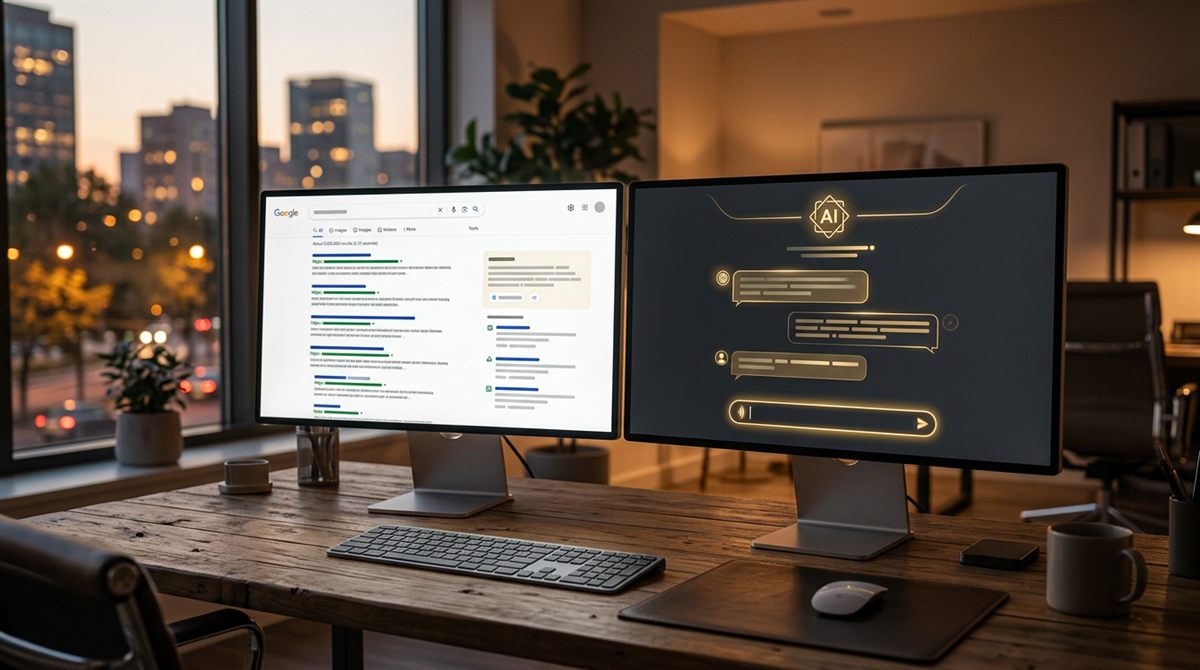
What is the difference between GEO, SEO and AEO?
SEO (search engine optimization) aims to rank your pages in Google and Bing results. AEO (answer engine optimization) aims to have your content used as the direct answer, such as featured snippets and voice results. GEO (generative engine optimization) aims to have AI assistants like ChatGPT, Perplexity and Gemini cite and recommend you. The foundations overlap heavily.
If you have been pitched "AI SEO", "AEO", "GEO", "LLM optimization" and "AI search optimization" in the same quarter, you are not alone. Some of these terms describe genuinely different goals. Others are rebrands. Before you pay for any of them, it helps to know what problem each one solves.
What is SEO for a medical practice?
Search engine optimization is the work of getting your pages to appear high in the list of results when someone searches Google or Bing. For a practice, the most valuable searches are usually local and specific: "pediatric dentist in Plano", "ACL surgeon Chicago", "Botox near me". SEO covers technical health (the site loads fast, can be crawled and has no errors), content (a page that genuinely answers each search), local signals (your Google Business Profile, reviews and listings) and authority (links and mentions from other reputable sites).
Success is measured in rankings, organic traffic, calls and booked appointments. It is the most mature of the three disciplines and still drives the most patient volume for most practices.
What is AEO?
Answer engine optimization grew out of the era of featured snippets, "People also ask" boxes and voice assistants. The goal is to have your content selected as the single direct answer to a question, rather than one of ten links. AEO work focuses on structure: a clear question as a heading, a concise answer of forty to sixty words right below it, then supporting detail, lists and tables, plus FAQ markup.
In 2026 the term is used loosely. Some agencies use AEO to mean optimizing for AI assistants, which makes it a synonym for GEO. When a vendor says AEO, ask them which answer surfaces they mean and how they measure appearing in them.
What is GEO?
Generative engine optimization was named in a 2023 research paper from Princeton University, Georgia Tech, the Allen Institute for AI and IIT Delhi. It describes making content more likely to be used and cited inside answers written by generative AI systems: ChatGPT, Perplexity, Claude, Gemini, Microsoft Copilot, Google AI Overviews and Google AI Mode.
The unit of success is different. In search you win a position; in an AI answer you win a mention, a citation or a recommendation, often with no click at all. GEO work therefore puts extra weight on things classic SEO treats as secondary: whether AI crawlers are allowed in, how clearly your facts are stated, whether your practice is described the same way across the web, and whether independent sources confirm what your site says. We explain the full service on our GEO for medical practices page.
How do the three compare?
| SEO | AEO | GEO | |
|---|---|---|---|
| Where you appear | Google and Bing results pages, the local map pack | Featured snippets, People also ask, voice answers | ChatGPT, Perplexity, Claude, Gemini, Copilot, AI Overviews, AI Mode |
| What you win | A ranking position | The single direct answer | A mention, citation or recommendation |
| Key inputs | Technical health, relevant pages, links, reviews, Google Business Profile | Question headings, concise answers, lists, FAQ markup | Crawler access, extractable facts, entity consistency, third-party mentions, structured data |
| Main measurement | Rankings, organic sessions, calls, bookings | Snippet ownership, impressions | AI crawler logs, assistant referrals, prompt testing |
| Typical time to first results | 3 to 6 months for competitive local terms | Weeks to months once rankings exist | Often weeks for crawl and first referrals, in our experience |
| Maturity of tooling | High | Medium | Early; much is measured manually |
How much do they overlap?
A lot. Google has stated that its AI Overviews and AI Mode draw on the same index and ranking systems as regular search, and that no special markup is required to appear in them. Pages that rank well are more likely to be retrieved by assistants, and pages written with clear question headings and direct answers tend to do well in all three places.
The practical overlap looks like this:
- A fast, crawlable site with clean HTML helps SEO, AEO and GEO.
- One page per condition or procedure, with a direct answer at the top, helps all three.
- Accurate schema markup helps all three, and matters most for GEO because it removes ambiguity about who you are.
- Reviews and consistent listings help local SEO and are frequently cited by assistants.
The work that is specific to GEO is smaller but real: allowing AI crawlers, stating facts in extractable sentences, keeping your entity consistent across directories and knowledge bases, publishing machine-readable fact files such as llms.txt, earning mentions on sources assistants trust, and measuring assistant activity that analytics tools do not show by default.
Which should a private practice prioritize?
For most practices, the honest answer is: build a strong SEO foundation, write it in an answer-first way, and add the GEO layer on top. Split by stage:
| Your situation | Where to focus first |
|---|---|
| New practice, thin website | Technical SEO, Google and Bing profiles, one page per core service, schema. GEO basics come almost free if you build this way. |
| Established practice with decent rankings | GEO layer: crawler access, entity consistency, answer-shaped rewrites of top pages, AI referral tracking. |
| Highly competitive specialty in a big metro | Both at full depth, plus authority building through press, affiliations and expert content. |
| Practice with patients coming from other states or countries | GEO early. Patients comparing providers across distance lean heavily on assistants to shortlist options. |
What should you ask an agency that sells GEO?
- Which AI crawlers do you check for, and will you show me my server logs?
- How do you measure whether assistants mention my practice, and how often do you report it?
- Which changes are GEO-specific, and which are standard SEO you would do anyway?
- What do you do about third-party sources, not only my website?
- What will you not promise? A credible answer includes "a guaranteed placement in ChatGPT".
For a longer list, see how to choose a medical SEO and GEO agency.
Is SEO dead because of AI search?
No. Search still sends the majority of website visits for most practices, and AI systems depend on search indexes to find current information. What is changing is the share of questions answered without a click, especially informational ones such as "what is the recovery time for a rotator cuff repair". Practices should expect fewer clicks for general health questions and relatively more value from being named as a provider. That is exactly why the GEO layer is worth adding now rather than later.
A simple way to think about it
SEO gets you into the library. AEO makes sure the right page is open to the right paragraph. GEO makes sure that when someone asks the librarian for a recommendation, your name is the one that comes to mind and there is enough evidence to back it up. You need all three, but you do not need three separate vendors or three separate budgets to get them.
What does each discipline look like in a real practice week?
Abstract definitions only go so far. Here is how the same goal, more new patients for knee replacement at an orthopedic practice, plays out under each label.
The SEO work
The team checks that the knee replacement page loads quickly on mobile, has a descriptive title and meta description, sits one click from the home page and is linked from related pages such as knee pain, arthritis and physical therapy. They research what patients in the area search for ("knee replacement surgeon", "partial knee replacement", "outpatient knee replacement") and make sure the page covers those topics. They work on the Google Business Profile, ask recent surgical patients for reviews and look for local organizations that might link to the practice.
The AEO work
On the same page, they add question headings that match what patients type and say: "How long is recovery after knee replacement?", "Am I too young for a knee replacement?", "What is the difference between partial and total knee replacement?" Each gets a two-sentence direct answer followed by detail. A comparison table sets out partial versus total replacement. A FAQ section at the bottom covers insurance, pre-surgery tests and when patients can drive.
The GEO work
They confirm that OAI-SearchBot, ChatGPT-User, PerplexityBot and Bingbot can fetch the page. They add MedicalProcedure markup and connect the surgeon's Person markup, with board certification and fellowship, to the page as author and reviewer. They align the surgeon's Healthgrades, Zocdoc and hospital affiliation profiles so every one mentions knee replacement and the same practice address. They ask ChatGPT, Perplexity and Gemini "who does outpatient knee replacement in [city]" every month and record what comes back and which sources are cited.
Notice how much of that is one project. A good agency does all three as a single plan, and bills it as one.
Which metrics should a practice track for each?
- SEO: organic sessions to service pages, map pack visibility for core services, calls and forms from organic search, booked appointments attributed to organic.
- AEO: the queries where your page supplies the featured snippet or People also ask answer, from Search Console and rank tracking.
- GEO: AI assistant referral sessions in GA4, user-triggered AI fetches in server logs, and your share of mentions across a fixed monthly prompt set. See measuring AI referrals.
Across all three, the metric that matters to the business is the same: new patients who booked, and what they are worth. Every other number is a leading indicator.
Does GEO work differently for different specialties?
The mechanics are the same, but the opportunity differs. Specialties with elective, researched decisions (plastic surgery, dermatology, orthopedics, fertility, bariatric surgery, dentistry) see patients who research heavily before choosing, and those patients increasingly use assistants to compare options. Specialties where patients arrive mainly by referral (many surgical subspecialties, oncology) benefit from GEO in a different way: referring physicians and patients who check a name they were given. In both cases the practice wants the assistant to describe it accurately and favorably when asked.
Frequently asked questions
Is GEO the same as AI SEO?
Mostly, yes. "AI SEO", "AI search optimization", "LLM optimization" and GEO are used interchangeably by many agencies. GEO is the term from the original academic research and describes optimizing content to be cited in answers from generative AI systems.
Does AEO still matter now that AI assistants exist?
The techniques behind AEO, such as question headings and concise answers, matter more than ever because AI systems favor content structured that way. The label is less important than the structure.
Do I need separate content for Google and for ChatGPT?
No. The same well-structured page serves both. What differs is the extra work around it: crawler access, entity consistency, third-party mentions and measurement of assistant activity.
Will FAQ schema get me rich results in Google?
Since 2023 Google shows FAQ rich results mainly for well-known authoritative government and health sites, so most practices will not see them. FAQ markup is still useful because it makes question-and-answer content explicit to every system that reads the page.
What should a practice spend on GEO versus SEO?
There is no fixed ratio. If your technical SEO and core service pages are weak, fix those first because GEO depends on them. If they are solid, the GEO layer is usually a smaller, focused project followed by monthly measurement.
Want to know how AI assistants see your practice today?
Send us your website. We will check how ChatGPT, Perplexity, Gemini and Google describe your practice and tell you, in plain English, what is holding you back. Pricing depends on scope, so we quote after the first call.
Keep reading
Fargon, A. (2026). "GEO vs SEO vs AEO: what doctors need to know". Only One Medical. https://onlyonemedical.co.il/en/insights/geo-vs-seo-vs-aeo-for-doctors