Which directories do AI assistants use for doctors? What our US panel found
Which directories do AI assistants use for doctors? In our November 2026 US panel, it depended on the engine: ChatGPT leaned on Healthgrades and Zocdoc, Perplexity on WebMD and Zocdoc, Gemini on Reddit and RealSelf, and Google AI Mode on Google Business Profile listings. Every engine also cited practice websites directly.
 By Adir Fargon, founder of Only One Medical (Israel) · Updated
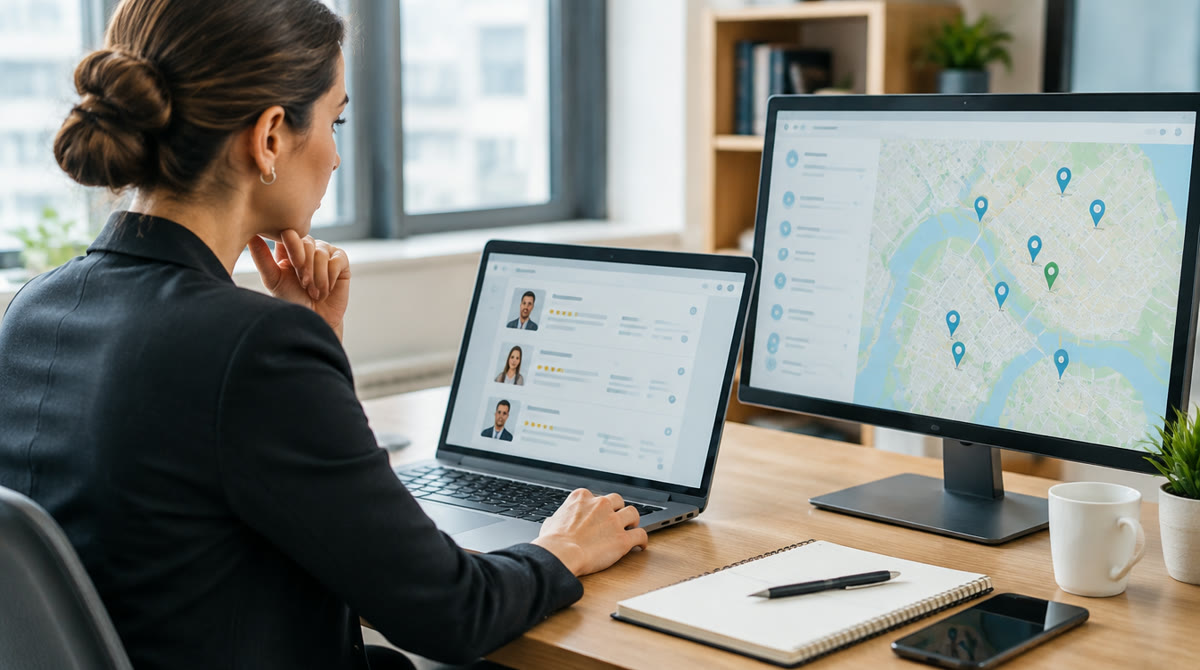
Which directories do AI assistants cite when recommending doctors?
In 155 answers to US doctor-recommendation questions (19 November 2026), the most-cited platforms were Healthgrades and Zocdoc for ChatGPT, WebMD doctor profiles and Zocdoc for Perplexity, Reddit and RealSelf for Gemini, and Google Maps listings for Google AI Mode. A practice needs accurate profiles on several platforms, not one.
When a patient asks an AI assistant for a doctor, the assistant does not consult a private list. It runs web searches, reads what comes back and names the providers it can support with sources. Those sources are a mix of practice websites, doctor directories, review platforms, hospital pages, specialty society finders and community sites. Which mix it uses varies a lot by engine, and that matters for where a practice should spend its effort.
This article reports what we observed in our own measurement run, explains what it means for a US practice, and ends with a checklist you can work through in an afternoon. The full method and the other findings are in our AI search visibility benchmark.
How did we measure which directories AI assistants cite?
On 19 November 2026 we asked five patient-style questions, each tied to a specialty and a US city: a dermatologist in Austin for adult acne, a plastic surgeon in Miami for a breast lift consultation, a dentist in Denver for dental implants, a chiropractor in Phoenix for low back pain, and an orthopedic surgeon in Chicago for a torn meniscus. Each question was asked 8 times per engine through DataForSEO with web search turned on and a US location where the engine supports one. That gave 40 answers each from ChatGPT, Perplexity and Gemini, and 35 from Google AI Mode (a sixth question and 13 AI Mode runs failed when our data account ran out of credit, so they are excluded).
For every answer we collected the cited URLs and grouped the domains into practice websites, directories and review platforms, hospitals and associations, community sites and Google's own listings. The numbers below count answers: "16 of 40" means 16 of the 40 ChatGPT answers cited that platform at least once.
The limits are real. API answers approximate what a patient sees in the consumer apps but are not identical. Five cities and one question per specialty is a small sample. Treat the figures as a dated snapshot, not a national ranking of directories.
Which platforms did each engine cite most?
| Engine | Answers citing a directory or review platform | Most-cited platforms (answers) |
|---|---|---|
| ChatGPT | 65% (95% interval 50 to 78%), 40 answers | Healthgrades 16, Zocdoc 9, plus hospital physician pages and the American Society of Plastic Surgeons finder |
| Perplexity | 80% (65 to 90%), 40 answers | WebMD doctor profiles 24, Zocdoc 16, rater8 review pages 8, dentistsranked.com 8 |
| Gemini | 43% (29 to 58%), 40 answers | Reddit 11, RealSelf 8, Castle Connolly 5, YouTube 5 |
| Google AI Mode | 23% (12 to 39%), 35 answers | Google Maps and Business listings 32, Zocdoc 6 |
Two patterns stand out. First, there is no single directory that every engine relies on. Healthgrades was ChatGPT's favorite and barely appeared elsewhere; WebMD profiles dominated Perplexity's sources; Gemini reached for community and review sites; Google AI Mode lived almost entirely inside Google's own business listings. Second, directories sit alongside practice websites, not instead of them. Practice websites were cited in 100% of Perplexity and Gemini answers, 74% of AI Mode answers and 53% of ChatGPT answers.
Why does Google AI Mode lean on Google Business Profile?
Google AI Mode cited Google Maps or Business listings in 32 of its 35 answers. That is consistent with how Google builds local answers: it already holds structured data about each practice (name, address, hours, categories, reviews, photos) and it uses that data first. For a practice, the practical meaning is simple. If your Google Business Profile is incomplete, has the wrong primary category, or shows a closed location, Google's AI answers inherit the error. Google Business Profile is the first listing to fix, and our guide to local SEO for clinics covers it in detail.
AI Mode also named a specific provider less often than the other engines (60% of answers, against 98 to 100% for ChatGPT, Perplexity and Gemini). It often answered with a short list drawn from the map results and a suggestion to check reviews, which makes the listing itself the thing patients see.
Which directories matter most for ChatGPT and Perplexity?
ChatGPT exposes the background searches it runs, and they are revealing. In 38 of its 40 answers, at least one background search was restricted to, or named, a directory or professional society, for example a search limited to healthgrades.com or zocdoc.com, or a search for the American Academy of Dermatology's "find a dermatologist" tool. In 20 of 40 answers a background search included the words "board certified". The assistant is actively looking for third-party confirmation of credentials, and directories are where it expects to find it.
Perplexity cited a directory or review platform in 80% of answers, most often WebMD's doctor profiles and Zocdoc. It also cited dedicated review aggregator pages. A profile that is unclaimed, outdated or thin on one of these platforms is therefore not a neutral omission: it is the version of your practice an assistant may quote.
Do specialty society directories and hospital pages count?
Yes. Hospital and university physician pages (for orthopedic surgery in Chicago, for example) and specialty society finders such as the American Society of Plastic Surgeons' Find a Surgeon tool were cited across engines, mostly by ChatGPT and Perplexity. These sources carry weight because they confirm membership or affiliation independently. If your specialty society offers a member directory, check that your listing exists, uses the same practice name and address as your website, and links to the right site.
The federal NPI Registry did not appear as a cited source in our answers, but many directories pull practice data from it. An outdated practice location in NPPES can propagate into directory profiles that assistants do cite, so it belongs on the checklist.
What about review sites, Reddit and YouTube?
Gemini was the engine most willing to cite community content: Reddit in 11 of 40 answers and YouTube in 5. RealSelf, a review community for aesthetic procedures, appeared in 8 Gemini answers, mostly for the plastic surgery question. You cannot and should not try to manufacture Reddit threads or reviews; that breaks platform rules and the FTC's rule on consumer reviews. What you can do is earn genuine reviews through a consistent routine, respond to reviews without disclosing patient information, and publish useful video. Our guides to Google reviews for doctors and online reputation management cover the rules.
A widely shared vendor figure says that around half of health citations in AI answers are listings rather than practice sites. It is a vendor claim we have not verified, and our own small panel does not settle it: the share of directory citations varied from 7% of cited domains (Gemini) to 34% (ChatGPT).
Which profiles should a US practice check first?
Work through this list in order. It is ranked by how often each platform appeared in our answers and how much it affects other listings, not by any payment or partnership.
| Platform | Why it matters for AI answers | What to check |
|---|---|---|
| Google Business Profile | Primary source for Google AI Mode (32 of 35 answers) | Primary category, every location, hours, phone, website URL, services, photos, recent reviews |
| Healthgrades | Most-cited directory for ChatGPT (16 of 40) | Claimed profile, specialties, board certifications, accepted insurance, office address |
| WebMD doctor profiles | Most-cited source for Perplexity (24 of 40) | Name spelling, practice address, specialty, conditions treated |
| Zocdoc | Cited by Perplexity (16), ChatGPT (9) and AI Mode (6) | If you list there: accurate visit reasons, insurance, location; if not, nothing outdated |
| Specialty society finder | Independent credential confirmation (ChatGPT, Perplexity) | Membership listing, same practice name and address as your site |
| Hospital affiliation page | Cited for surgical specialties | Current affiliation, link to your practice site |
| Review platforms (Yelp, RealSelf where relevant) | Gemini and Perplexity cite review pages | Claimed profile, accurate details, reply routine without patient information |
| NPI Registry (NPPES) | Feeds many directories | Current practice location and taxonomy |
| Your own website | Cited in 53 to 100% of answers depending on engine | Specialty and city in the first paragraph, one page per service, physician bios with credentials |
Consistency is the goal. An assistant that finds the same name, address, specialty and credentials on your website, your Google listing and two or three directories has an easy, safe answer. One that finds three different addresses has a reason to recommend someone else. The AI visibility checker walks through these checks and gives you prompts to test your own practice.
How often should you recheck directory profiles?
Quarterly is a sensible rhythm for most practices, and immediately after any change of address, phone number, physician roster or hours. Directories update on their own schedules, and some re-import data from other sources, which can quietly overwrite a correction. Keep a simple spreadsheet of each profile, its login owner and the date last checked.
Who wrote this, and what do we do?
Only One Medical is a marketing agency for physicians based in Israel. We work remotely with US practices on SEO, Generative Engine Optimization (GEO) and websites; our client work so far is in Israel. We do not manage paid ads for US practices, do not handle patient information, and do not sell directory placements. The data here comes from our own measurement run; how we count our numbers is on our numbers page.
Sources
- Google Business Profile Help: tips to improve your local ranking. Relevance, distance and prominence as Google describes them.
- CMS NPPES NPI Registry. The federal provider registry many directories draw on.
- American Society of Plastic Surgeons: Find a Surgeon. An example of a specialty society directory cited in our answers.
- 16 CFR Part 465, FTC Rule on the Use of Consumer Reviews and Testimonials. Why reviews must be genuine and unconditioned.
- Google Search Central: AI features and your website. How Google describes AI Overviews and AI Mode sourcing.
Frequently asked questions
Which directory is most important for AI assistants?
No single one. In our November 2026 US panel ChatGPT cited Healthgrades most, Perplexity cited WebMD doctor profiles most, Gemini cited Reddit and RealSelf, and Google AI Mode cited Google Business Profile listings in 32 of 35 answers.
Do AI assistants use Google Business Profile?
Google's own AI Mode does, heavily: it cited Google Maps or Business listings in 32 of 35 answers in our panel. Other engines cited it rarely, so a complete Google profile is necessary but not sufficient.
Should I pay for premium directory listings to appear in ChatGPT?
Our data does not show that paid placement drives citations. Assistants cited free, accurate profile pages. Start by claiming and correcting free profiles; judge paid upgrades on their own merits for patients.
Does my own website still matter if assistants cite directories?
Yes. Practice websites were cited in 100% of Perplexity and Gemini answers, 74% of AI Mode answers and 53% of ChatGPT answers. Directories confirm; your site explains.
How big was the sample?
Five specialty and city questions, 8 runs per engine, 155 answers in total, collected on 19 November 2026 through DataForSEO. It is a snapshot, not a national study.
Can Only One Medical update my directory profiles?
We guide and check them, but profiles stay in the practice's name and control. We work remotely from Israel and do not create listings with addresses we do not verify.
Want to know how AI assistants see your practice today?
Send us your website. We will check how ChatGPT, Perplexity, Gemini and Google describe your practice and tell you, in plain English, what is holding you back. Pricing depends on scope, so we quote after the first call.
Keep reading
Fargon, A. (2026). "Which directories do AI assistants use for doctors? What our US panel found". Only One Medical. https://onlyonemedical.co.il/en/insights/healthcare-directories-ai-assistants-cite